
GRE Verbal Reasoning: 7 Proven Tips for Non-Native Speakers 📚🧠

Why GRE Verbal Feels Like a Minefield
For many international students, the Verbal Reasoning section of the GRE is the toughest challenge of the entire exam.
Why? Because it throws at you:
- Archaic, academic vocabulary
- Long, dense, complex sentences
- Subtle shifts in tone and logic
- Tricky answer choices that look correct at first glance
But here’s the truth: you don’t need to be a native English speaker to crush GRE Verbal.
What you need are the right strategies, the right habits, and consistent practice.
This guide reveals 7 practical tips designed specifically for non-native speakers to build vocabulary smarter, read faster, and answer GRE Verbal questions with confidence.
And if you want expert feedback, mock tests, and structured study plans, explore our GRE preparation course at American School Online, trusted by hundreds of international students.

Why GRE Verbal Is Difficult for Non-Native Speakers
It’s not just about “knowing English.” The GRE tests your ability to:
- Decode academic vocabulary (sometimes words you’ll never hear in daily life).
- Understand dense passages about philosophy, economics, or natural sciences.
- Recognize tone and nuance (e.g., skeptical vs. neutral).
- Avoid traps where two answers look correct but only one fits the logic perfectly.
👉 Good news: GRE Verbal is not testing “how native you sound.”
It’s testing reasoning under pressure. That’s a skill you can absolutely train.
Tip 1: Focus on Word Families, Not Isolated Words
Memorizing endless word lists doesn’t work. You’ll forget them or confuse meanings.
Instead, learn roots, prefixes, and word families.
Examples:
- bene- = good → benefit, benevolent, benefactor
- mal- = bad → malice, malfunction, maladaptive
- analyze → analysis → analytical
📌 Study antonyms too. Many GRE questions use contrast to test word meaning.
Action Plan:
- Learn 10–15 new words per week in thematic groups.
- Use Anki or Quizlet for daily review.
- Write mini-sentences using each form of the word.
Tip 2: Read Dense English Every Day
GRE passages come from journals, essays, and academic discussions. To perform well, train your brain to handle dense input regularly.
Recommended sources:
- The Economist
- The Atlantic
- New York Times Opinion
- Scientific American
- Academic blogs, research summaries, long-form essays
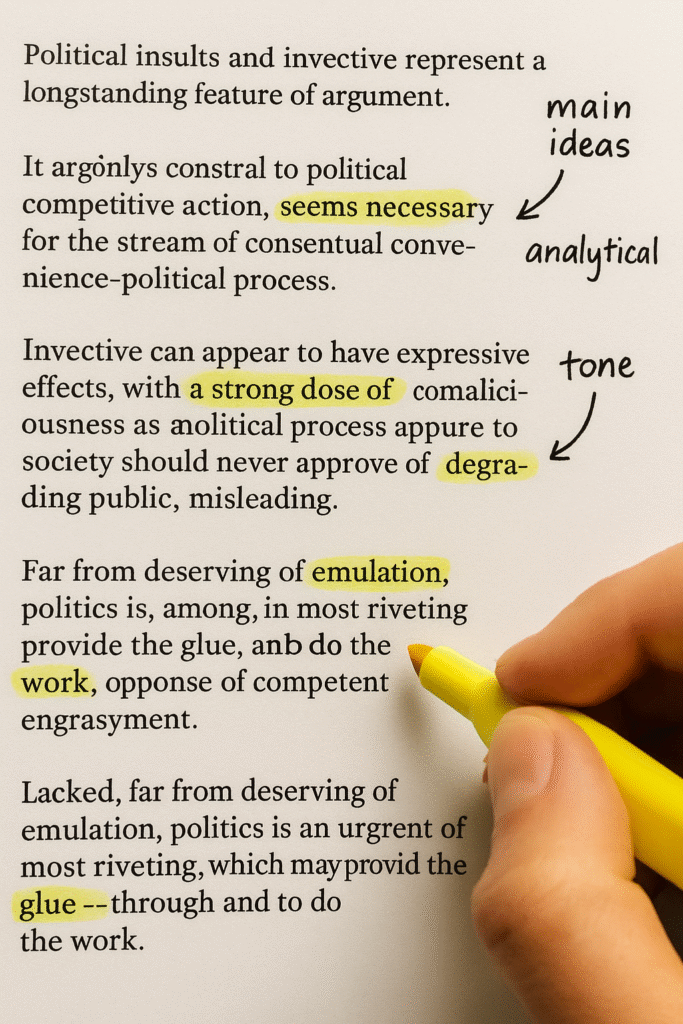
🎯 Don’t just read for “understanding.” Train to identify:
- Tone (sarcastic, skeptical, enthusiastic)
- Main idea vs. supporting details
- Structure (problem → solution → evidence → counterpoint)
Tip 3: Master the Three Question Types (and Their Traps)
GRE Verbal has three main question types:
- Reading Comprehension – Passages of 1–3 paragraphs with multiple questions.
- Trap: Answer choices that restate part of the passage but twist the meaning.
- Text Completion – Fill-in-the-blank sentences or short passages.
- Trap: Words that “sound academic” but don’t fit logically.
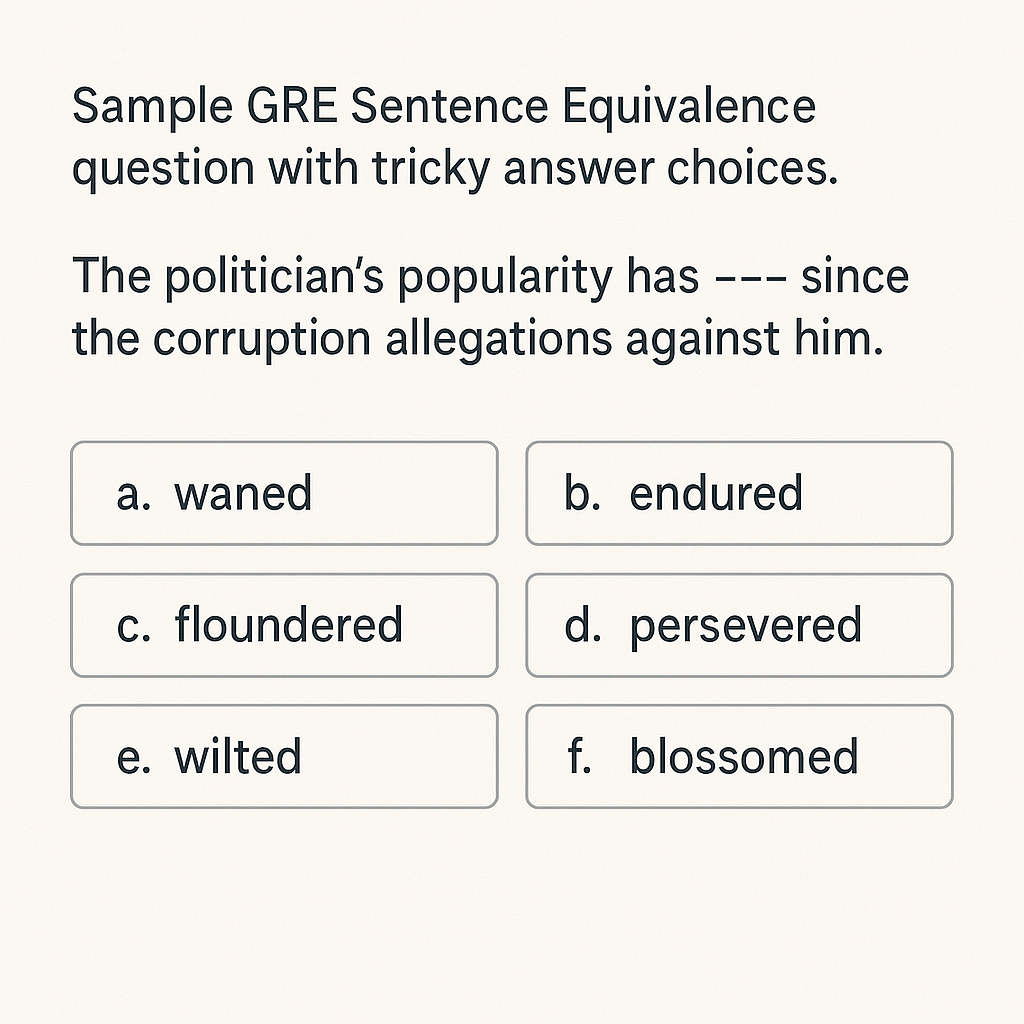
- Sentence Equivalence – One sentence, two blanks, choose two correct words.
- Trap: One correct answer + one near-synonym that seems right but isn’t.
🧠 Key strategy: Eliminate aggressively. Ask:
- Does this word fit the tone?
- Does it make logical sense in the context?
- Would it change the meaning too much?
Tip 4: Practice “Slow Thinking” Before Speed
Most non-native speakers rush through passages and miss nuance. Instead:
- Read sentences slowly at first, word by word.
- Translate difficult clauses into your own words.
- Break down complex sentences into chunks.
Once you gain accuracy, add time pressure gradually.
Simulate exam speed only after you can consistently answer correctly at slower pace.
Tip 5: Learn Vocabulary Through Context (Not Just Definitions)
Definitions alone are not enough. The GRE wants you to apply words in context.
For every new word:
- Read it in 2–3 sample GRE-style sentences.
- Write your own example sentence.
- Create a memory hook (story, image, emotion).
Example:
- Obfuscate = to make unclear.
👉 “The politician tried to obfuscate the truth with vague promises.”
📌 Teaching the word to someone else is one of the most effective ways to cement it.
Tip 6: Double Exposure with Audio + Reading
Strengthen comprehension and tone recognition by combining listening + reading:
- Listen to podcasts or TED Talks.
- Read along with transcripts.
- Pause to repeat key phrases out loud.
🧠 This builds dual input memory (ear + eye), making it easier to detect subtle meaning shifts in GRE questions.
Tip 7: Keep an Error Log (Your GRE Journal)
One of the biggest mistakes is doing endless practice without reviewing errors.
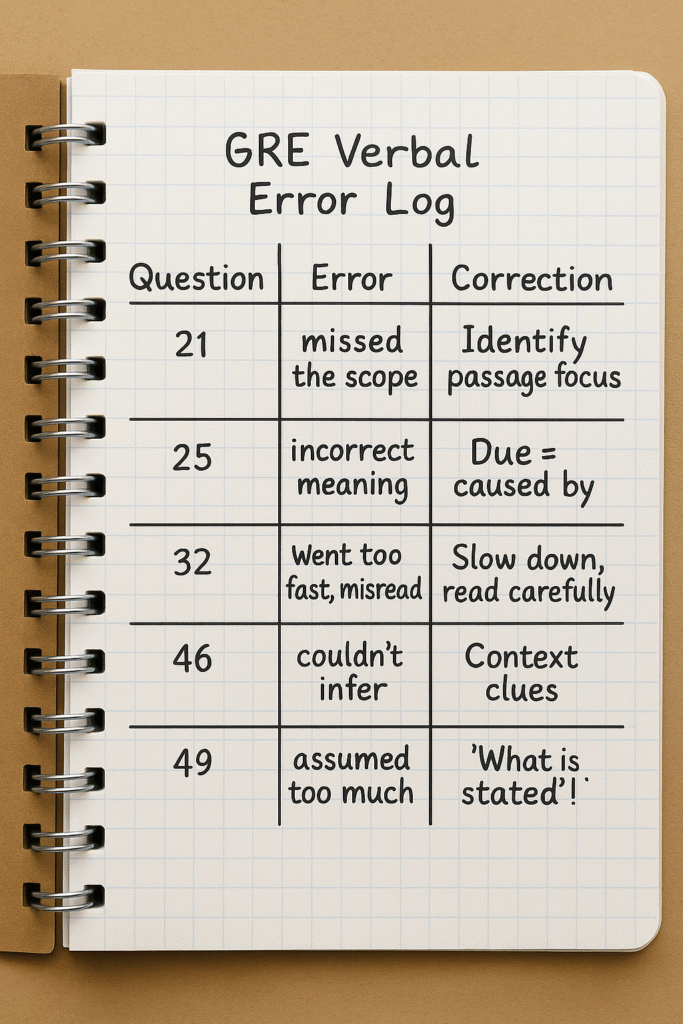
Instead, maintain a GRE Verbal Journal.
Every time you miss a question:
- Note the word/concept.
- Question type (RC, TC, SE).
- Why you chose the wrong answer.
- The correct reasoning.
📒 Review your journal weekly. You’ll see patterns (e.g., always missing tone questions, or always misinterpreting complex negations).
Final Word: Yes, You Can Master GRE Verbal
Remember:
- You don’t need to be “native.”
- You don’t need perfect grammar.
- You just need method, strategy, and practice.
Thousands of international students hit 155–165+ in Verbal every year by training smarter, not harder.
With focus and guidance, you can too.
👉 Ready to take the next step? Join our GRE preparation course or sign up for a free consultation at American School Online.
Lorem ipsum dolor sit amet, consectetur adipiscing elit. Ut elit tellus, luctus nec ullamcorper mattis, pulvinar dapibus leo.

Author: faraz_sa33d
Instractor






Responses